
Section 1. Introduction: Why the Industry Missed Digitization, or Fighting Losses on the Factory Floor
The modern market poses harsh conditions for Ukrainian business, bringing survival, optimization, and operational efficiency to the forefront. In this continuous race, it is easy to miss strategically important things—deep modernization and digitization of entire industries. Today, light industry faces immense pressure: on the one hand, complicated logistics and rising resource costs; on the other, aggressive competition from Turkish and Asian manufacturers. In this reality, losing money on inefficient management is a luxury no one can afford.
As the founder of SiWItPro, my team and I have spent the last four years living inside a Ukrainian sewing factory (specializing in men's and women's underwear). We didn't just write code based on a third-party specification. We fully integrated into the processes at the level of physical labor: we stood at the cutting tables, assembled orders, distributed tasks to seamstresses, and resolved conflicts over hardware shortages in the warehouse. Only someone who has halted a production line of 15 seamstresses because the tech card indicated the wrong thread consumption, or didn't account for the minimum number of bobbins needed for a machine (causing the foreman to invest time in rewinding bobbins instead of quality control), or ran out of a few size tags due to a defect during sewing, truly understands what real production chaos is.
The main problem of the software market is the total disconnect between ERP developers and actual production. Most solutions on the market were created by IT specialists who have never seen a 4-thread overlock machine or a cutting table. This leads to a fundamental error: instead of a flexible tool, the business gets a generator of routine manual labor for the staff and a source of fatal errors in specifications.
As the classic of software engineering, Frederick Brooks, wrote in his fundamental work "The Mythical Man-Month":
«The programmer, like the poet, works only slightly removed from pure thought-stuff. He builds his castles in the air, from air, creating by exertion of the imagination. Yet the product must be tested in the real world, and the real world is unforgiving».
The reality of garment manufacturing is the economy of millimeters, seconds, and kitting discipline. In underwear production, any error in the tech card or specification manifests directly on the line. If a technologist miscalculates the consumption of elastic tape, fails to account for tension during binding, or messes up the hardware SKU, the line stops. For a batch of 3,000 sets, this means dozens of finished parts that cannot be assembled, or a shortage of adjusters and hooks for the last 150 items. As a result, the entire batch is stalled as incomplete, seamstresses sit idle, and the factory incurs colossal losses.
At the same time, the cost of a qualified technologist in the Ukrainian labor market today starts at 35,000 UAH, and in practice, up to half of this expensive specialist's working time is spent on mechanical routine. Using a highly paid engineer as a "data entry operator" in non-adapted software is a direct financial loss.
We took a different path and created a system strictly tailored for the real work of a sewing shop:
- Total control of the tech card by operation: There are no abstract positions in the system. Each item is broken down into specific technological operations linked to equipment (3-thread overlock, coverstitch machine, bartack machine), thread consumption per seam, execution time, and complexity category.
- Automatic assembly of shift tasks: The specification calculates the exact need for hardware and components for each production line under a specific size range and color model.
- Fool-proof protection at the shop level: The foreman or brigade leader cannot issue a batch launch to the line until all necessary hardware of the required color and size is physically assembled in the warehouse. The system blocks the launch transfer to the seamstresses, eliminating the situation where semi-finished products are sewn but cannot be assembled into a finished garment due to missing small parts.
We took a simple and practical approach—combining the entire order journey from client to factory floor in one understandable program:
- An end-to-end "all-in-one" system: We combined client databases, warehouse accounting, document flow, and the daily output tracking of each seamstress into one base.
- Automatic kitting control: The program itself compares the order specification with the real availability of materials in the warehouse. The foreman doesn't need to manually count hardware boxes: if even one item is missing, the system simply won't allow the order to be sent to the workshop, protecting you from unplanned downtime.
- No paperwork routine: You enter only the necessary minimum data into the system, and the program manages it from the application moment to the automatic call for a courier for the shipment of the finished batch.
At the same time, we have laid the groundwork and are already testing the system for future development: external sensors on sewing machines that track actual equipment operation time, prompt the mechanic for maintenance, and help the system distribute the load on seamstresses more accurately. The program's logic is already ready for integration with automated robotic warehouses when your production grows to that scale. And the "cherry on top"—upon accumulating the necessary amount of data, the system can independently distribute tasks to seamstresses.
Let's analyze each system module step-by-step and see how they work in practice.
Section 2. The Foundation: Technical Documentation as the Basis of Digital Production
Any automation is powerless if the system receives chaotic or incomplete input data. For the SiWItPro digital platform to run like clockwork, managerial chaos must be replaced by a clear package of technical documentation.
Contrary to stereotypes, preparing this package does not require superhuman effort—it requires planning and discipline. As Peter Drucker accurately noted:
«If you can't measure it, you can't manage it».
Below is a list of mandatory documents that make up the "digital passport" of every product in the system.
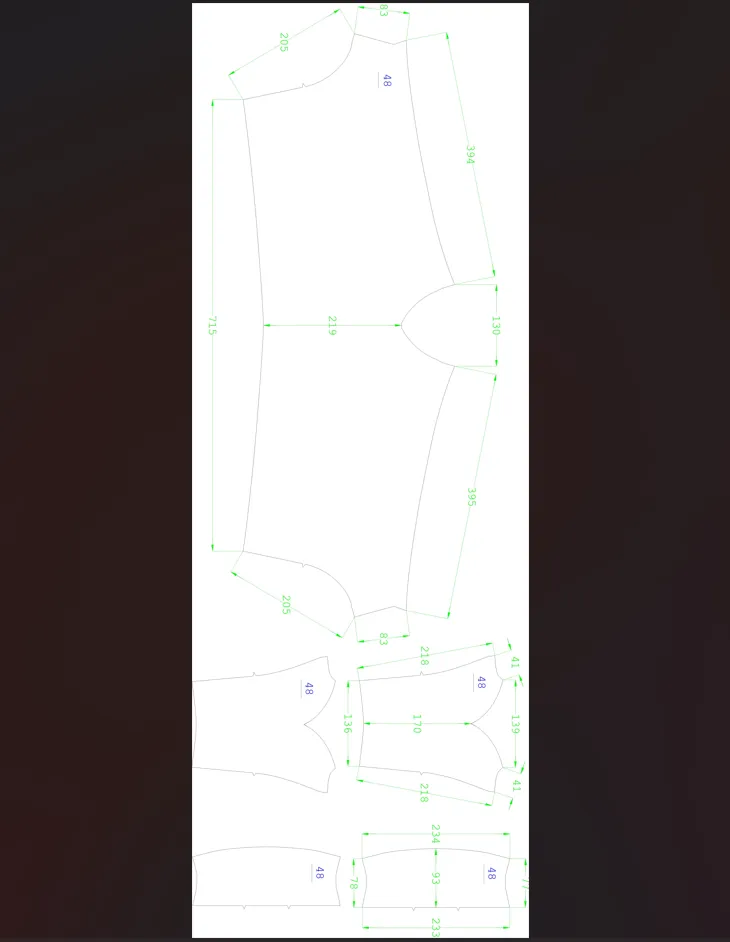
1. Electronic Patterns (PLT, DXF Formats)
In modern production, the stage of manual cutting is a thing of the past. The presence of a pattern complex in digital formats (PLT, DXF) is a strict basic requirement.
It is from these electronic files that the system and the cutting complex form optimal automatic layouts, taking into account the size range, fabric width, and grainline direction. Without a digital pattern, it is impossible to calculate the exact inter-pattern waste and automatically generate the normative fabric consumption.
2. Step-by-Step Technological Sequence
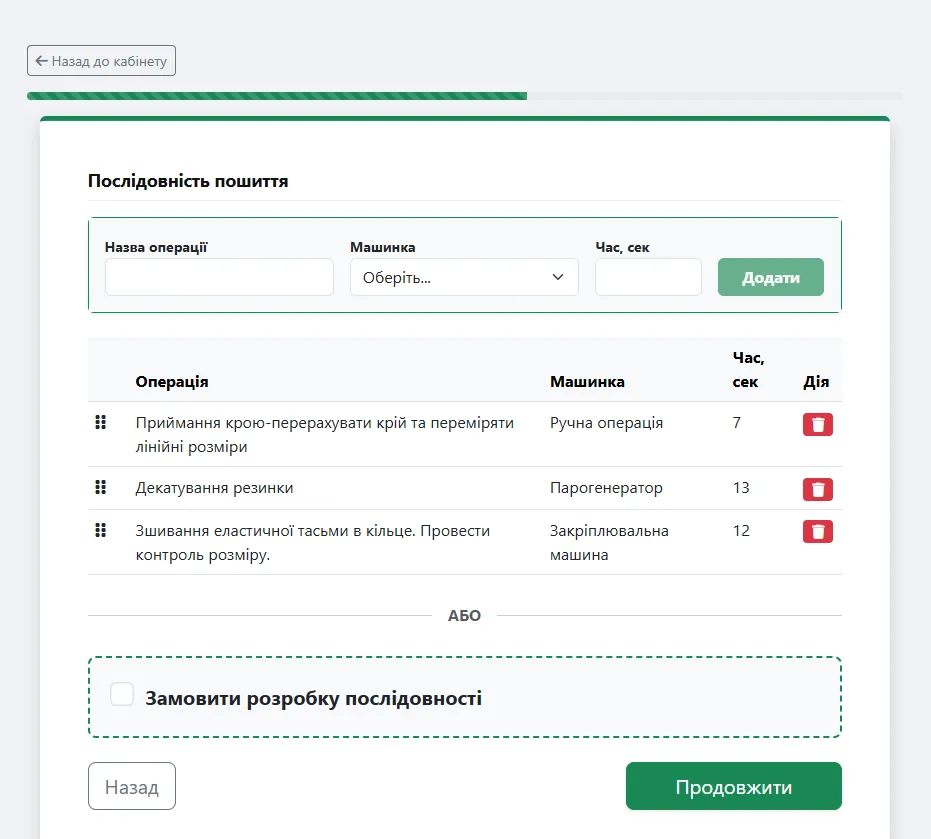
This is a step-by-step "assembly instruction" for the product, created by the constructor and technologist. The document regulates not just the assembly order, but the complete technological card, which must contain:
- Equipment used: the classic basic group (lockstitch, 3-/4-thread overlock, coverstitch, flatlock, bartack) or specialized machines.
- Technical parameters: stitch width and type, needle brand and thickness, thread combination (core-spun, textured).
- Time standards: the theoretical time (in seconds) to perform each operation.
Launch Practice and Adaptation Economics:
It is important to understand: the normative time per operation at the beginning of a launch will always fluctuate. Practice shows that proofreading the chronometry, adapting seamstresses to the model's nodes, and the line reaching a stability plateau occur after crossing the threshold of 1000 – 2000 units (depending on the model's complexity). Sewing a control sample and launching the first small batch are always more expensive, as they include fixing the actual chronometry. After this, the time standards in the system are verified down to the second.
3. Product Specification (BOM-card)
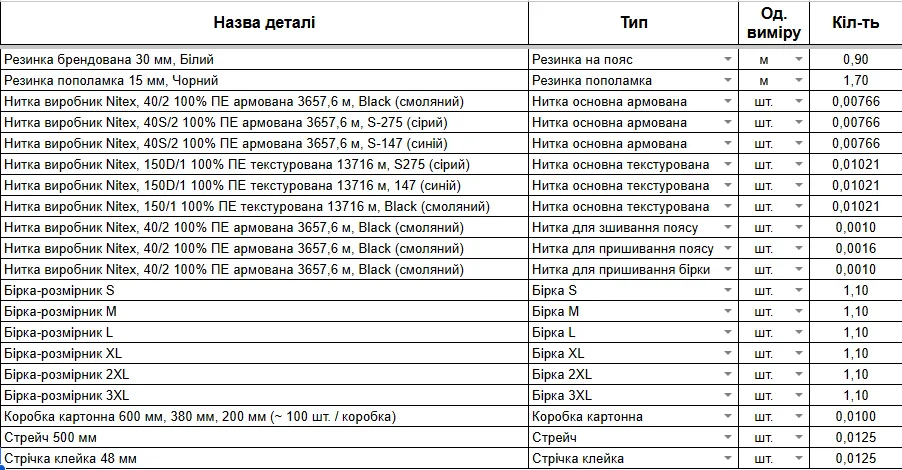
The specification is the main production document, in which the majority (99.9%) of clients make critical errors during initial completion. The designer-constructor must be responsible for its compilation, as they lay down the architecture of the product.
Main "blind spots" when compiling specifications:
- Ignoring technological losses and material properties.
Specifying a tag is simple (1 pc per product). But when calculating elastic waistband tape, you cannot set the pure length from the pattern (e.g., 0.9 m). The constructor must account for the shrinkage percentage during decatizing, loss at the bartacks, and possible technological defects. In practice, 1.0 m is entered into the specification, creating the necessary normative reserve. - End-to-end thread consumption calculation (core-spun and textured).
For a digital system, the concepts of "a little," "a couple of meters," or "by eye" do not exist. Every seam has a precise mathematical consumption. For example: sewing an elastic band—black core-spun thread; bartack seams—core-spun thread matching the fabric color; edge finishing—textured thread. - Converting meters to bobbins (purchasing in pieces).
You buy and pay for threads in bobbins, not meters. A supplier won't sell you 13,000 meters of thread if the standard winding is 10,000 m—you'll have to buy 2 bobbins (20,000 m).
Calculation Example:
Core-spun thread (5,000 m winding), consumption per product—5 m: (5 m / 5000 m) = 0.001 bobbin (pc) per 1 product
Textured thread (10,000 m winding), consumption per product—110 m: (110 m / 10000 m) = 0.011 bobbin (pc) per 1 product
- Transport packaging and consumables.
A common mistake is accounting only for the individual bag and ignoring the logistical packaging. The specification must include:- Transport box capacity (how many finished products fit into a corrugated box).
- Tape consumption for assembling and sealing one box (in meters/linear fractions).
- Stretch film consumption for palletizing.
- Small labeling: technical stickers, barcode labels, size stickers for bags.
Note: Even if, by contract, packaging is purchased at the factory's expense, it must be entered into the specification. Otherwise, the system will not be able to block the launch of the batch if boxes are missing in the warehouse.
4. Dimensional Spec & Tolerances
The document regulates the geometric parameters of the finished product when laid flat, for each size. The spec sheet must contain:
- Overall dimensions of the finished product and allowable deviations (tolerances in cm/mm).
- Geometric dimensions of the cut parts, taking into account seam and shrinkage allowances.
Adding the cutting tolerances and the finished assembly tolerances gives the technological norm by which Quality Control (QC) accepts the finished products.
Section 3. "Cutting" Module: Raw Material Accounting, CAD Integration, and Laying Out
The cutting room is a dangerous place for money and material leaks in garment manufacturing. An error in calculating the working width of the fabric or a mixed-up roll sends hundreds of meters of fabric to the scrap heap before the cut even reaches the seamstresses.
To minimize the human factor, we coded the work of the cutting block into a rigid algorithm with mandatory confirmation points.
1. Roll Marking and Batch Accounting
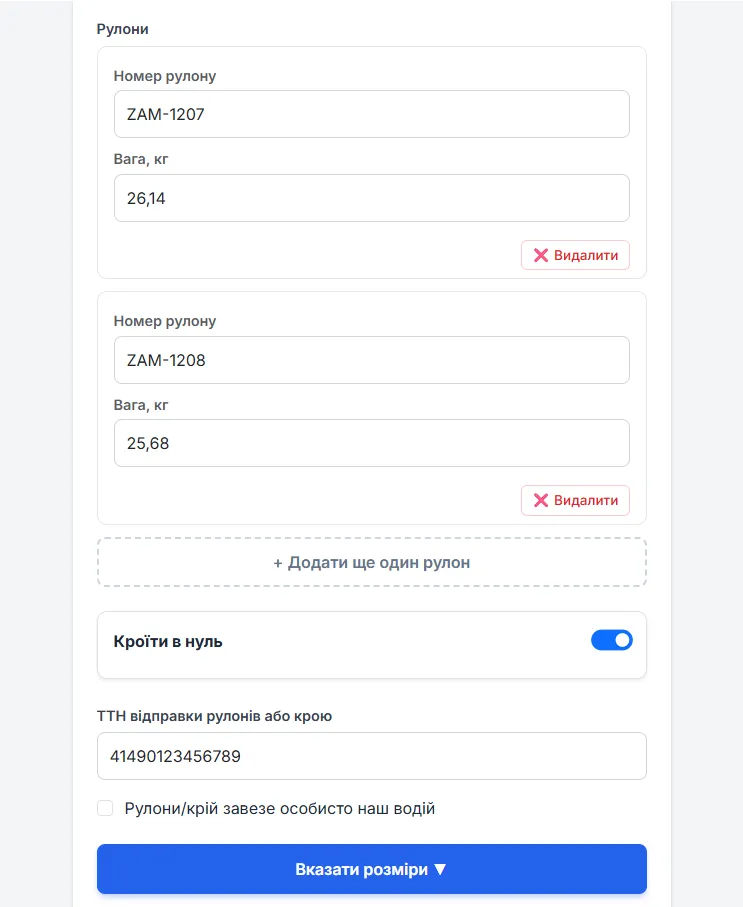
Basic rule: raw materials are not accepted for work without a link to a specific order, and each roll is marked with a unique code (e.g., client abbreviation + sequence number).
Why is this needed:
Accounting is not done "on average across the warehouse." The system rigidly links a specific cutting batch to a specific physical roll. If the warehouse holds 10 rolls of black jersey from different suppliers or clients, the program physically won't allow a "similar" roll to be used in the spread. Material consumption, inter-pattern waste, and actual part yield are calculated strictly according to the passport data of the linked roll.
2. Order Processing and Raw Material Registration
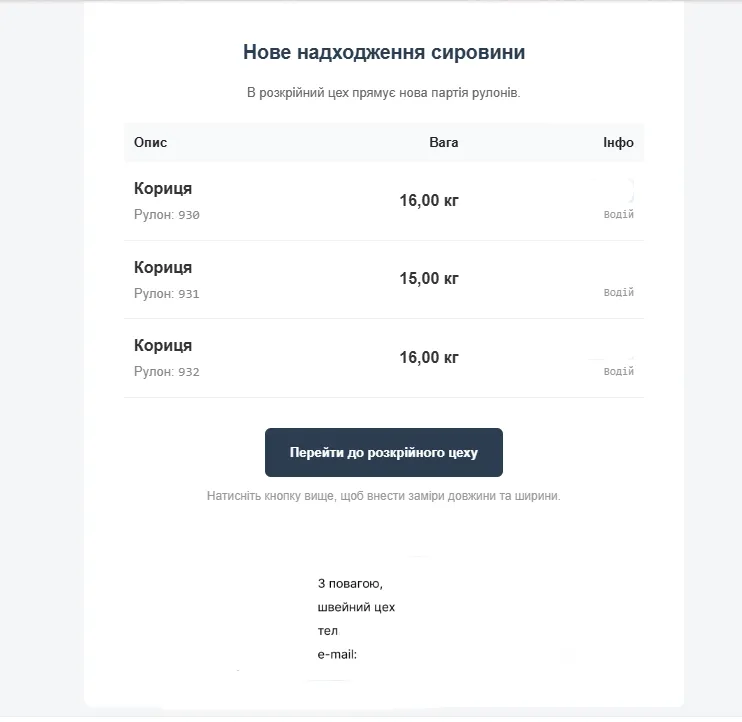
All incoming rolls are registered in the system with a link to a specific order. A notification about the planned arrival of the fabric goes to the cutting room automatically right after the record is created in the database.
Practice: Accepting raw materials into the warehouse before placing an order in the system is not recommended. "Blind" acceptance leads to confusion with batches, unnecessary movements, and senseless waste of storekeepers' time.
3. Incoming Control: Converting Kilograms to Linear Meters
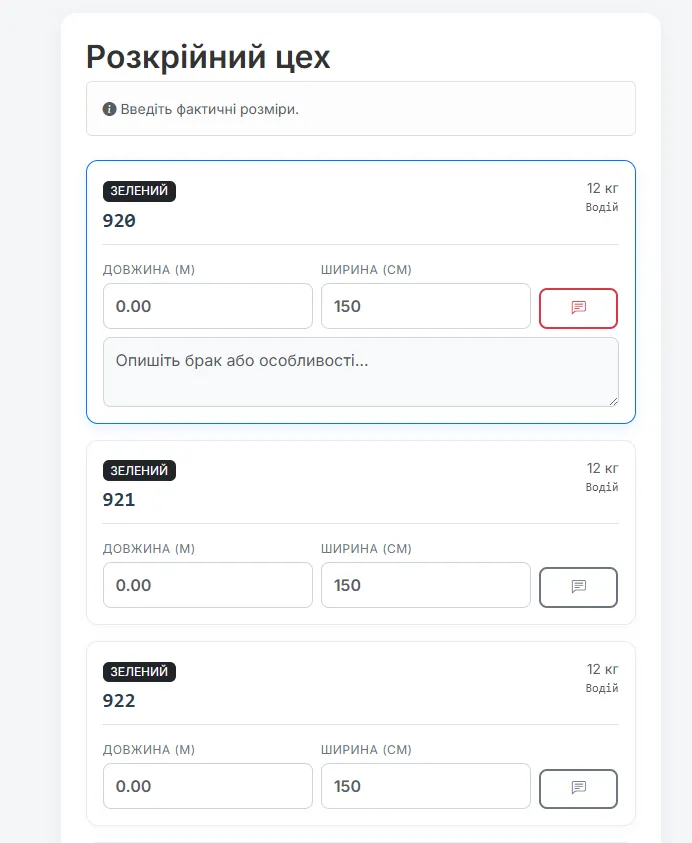
Knitted and elastic fabrics are purchased in kilograms. However, CAD builds layouts, and the factory sews products in meters. The task of incoming control is to record the actual metric parameters of the roll.
- Fabric measurement: The cutter remeasures the actual length of the roll and its useful (working) width—excluding the selvage, edge defects, and creases.
- Data entry: Filling out the form takes 2 minutes: only the actual length and working width of the roll are entered.
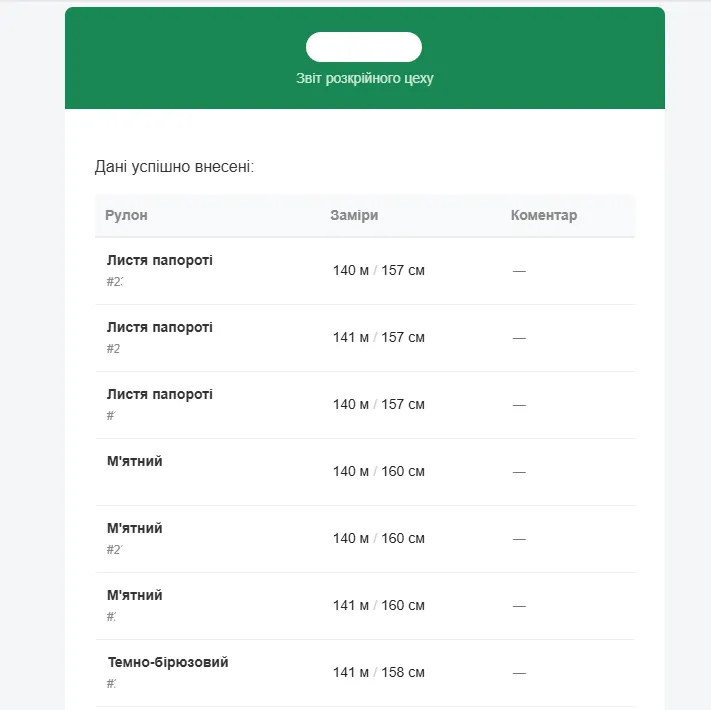
- Defect Act: The program automatically generates a report and sends it to the customer. A confirmation button is embedded in the email.
First control point: The customer officially confirms in the system that they are satisfied with the received length and width. Only after this click does the program allow data transfer to CAD for building layouts.
4. Issuing the Cutting Task
After the customer confirms the defect report:
- The program automatically generates a set of documents for cutting: electronic patterns (PLT/DXF), a task for the number of items per size, and the technologist's comments.
- The factory manager checks the kit and, with one click, sends the task to the cutting room. If necessary, the manager can adjust the data before sending.
5. Automatic Layout Module and G-code (In Development)
We are currently testing an automatic layout building module (Auto-Nesting):
- The program itself, without the participation of a lay-planner or human, calculates the optimal layout for a given number of units, taking into account the technological tolerances of the table and minimum waste.
- For automatic cutting complexes (ARC), the system immediately generates a ready-to-use G-code (knife control files) and attaches it to the task.
6. Fixing the Cut Output and Closing the Task
Upon completion of the cutting, the cutter follows the link from the task and fills out the final report:
- The fields with the planned number of parts by size are already pre-filled.
- The cutter only needs to enter the number of actually spread plies and the length of the spread.
- The program automatically recalculates and enters the actual yield of cuts by size into the database.
The final report is automatically sent to the factory manager and the customer. The customer sees the exact amount of finished cut, and the sewing shop receives a signal that the parts are ready for kitting and launch.
Section 4. "Warehouse" Module: Material Accounting, Reservation, and Automation
«A warehouse is not a place to store things; it is company money converted into physical form. An error in material accounting equals a direct loss from the cash register.»
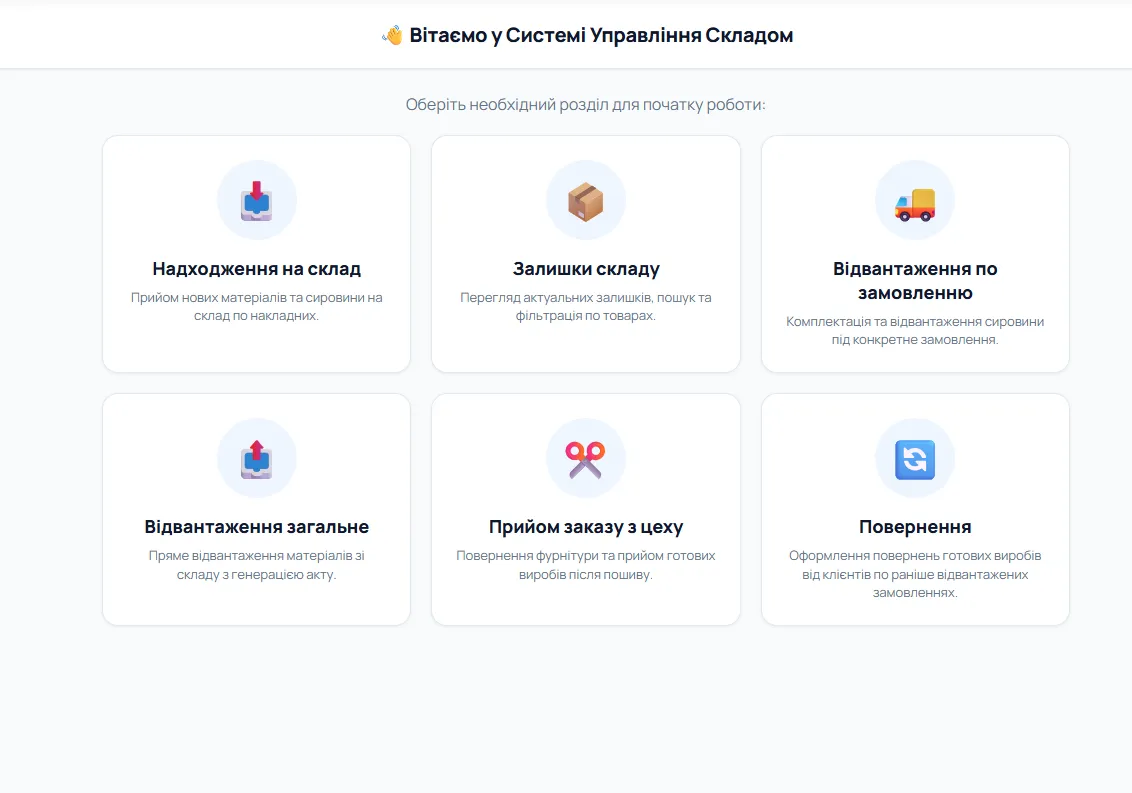
The warehouse is the point where data from all departments converge: sales, cutting, sewing lines, and supply. Any chaos in the warehouse instantly blocks the factory's operation. Accounting here is built on strict automation, eliminating reliance on human memory.
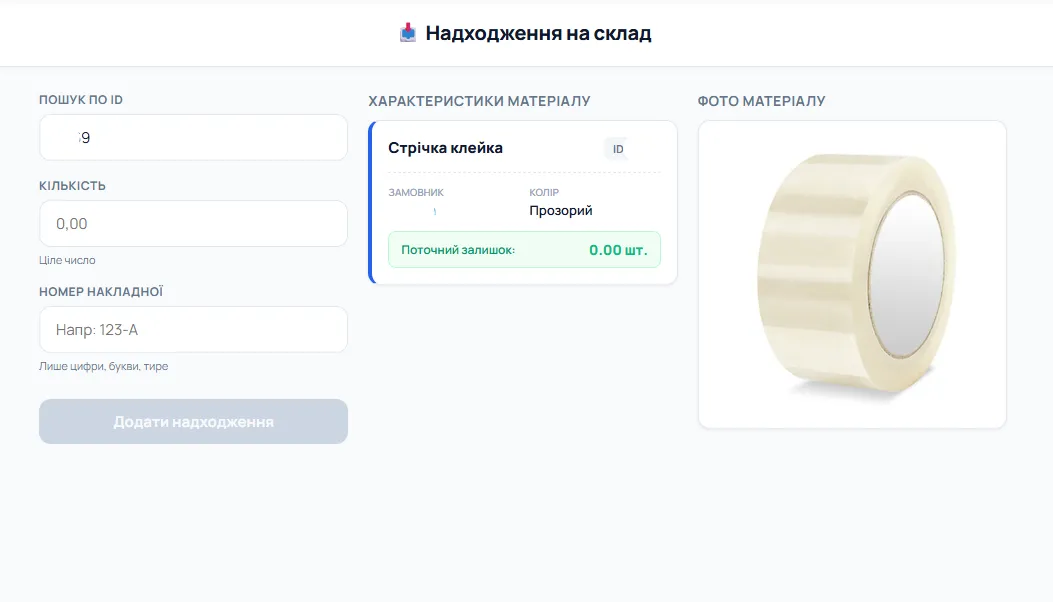
1. Raw Material Receiving by ID and Visual Verification
The foundation of warehouse order is linking every unit to a unique digital ID.
- Receiving strictly on order: Contracts with customers must include a mandatory requirement: all incoming hardware and materials must be marked with IDs from the system. Receiving raw materials without a link to a specific order is prohibited—otherwise, the factory's warehouse turns into a free buffer archive for which the storekeeper bears material liability.
- Visual control: Upon scanning or entering an ID, the storekeeper's screen displays not only the SKU and characteristics but also a photo of the item. This eliminates the accidental receipt of similar hardware of a different tone or size.
Analysis of the Storekeeper's Role: Should They Know the Nomenclature?
The answer is unambiguous: no, under no circumstances.
Imagine a pharmacy where the pharmacist searches for medicines not by barcode and shelf but tries to remember "which box held similar white pills." In garment manufacturing, nomenclature includes thousands of items: threads of different densities and tones, elastic bands, bindings, buttons. If accounting relies on an "experienced storekeeper," the factory stops the day they fall ill or quit.
Knowing the nomenclature, SKUs, and norms is the program's job. The storekeeper's job is to count the physical quantity, verify the photo on the screen, and enter the number.
2. Order Constructor, Reservation, and Shortage Control
The customer builds an order in the system like a constructor: selecting a model, fabric color, size grid, and specific hardware (elastic color, thread type, branded tags).
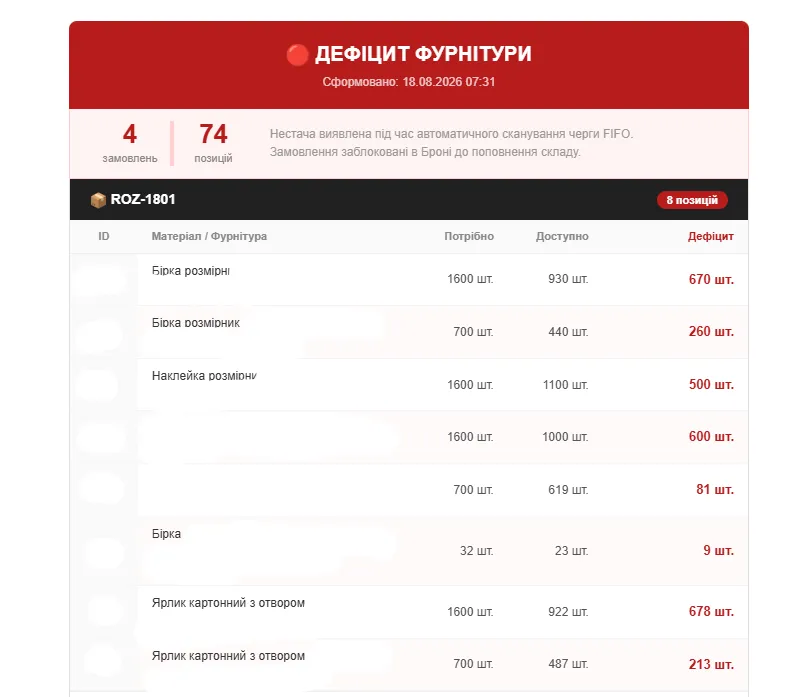
- Protection against double booking: The program calculates the need for hardware and compares it with current balances. The algorithm accounts for reservations made previously for other batches. If the hardware is in the warehouse but already reserved, the system will record a shortage for the new order.
- Automatic recalculation upon cutting: In case of a shortage, the system sends notifications to the customer and manager. As soon as the cutting room finishes spreading and enters the actual part yield (cut), the program recalculates the exact need for hardware for the real volume of the cut.
- 100% Kitting: The order is transferred to the sewing room only when completely kitted with cuts and hardware. The storekeeper issues a ready kit to the line and spends no time looking for missing items during sewing.
«On two occasions I have been asked, 'If you put into the machine wrong figures, will the right answers come out?' I am not able rightly to apprehend the kind of confusion of ideas that could provoke such a question.»
— Charles Babbage
The accuracy of programmatic issue calculations is 99.99% (leaving 0.01% in case of a meteorite strike). If data is entered correctly, errors during the kitting phase are eliminated.
3. Goods Movement: Receiving from the Floor, Shipping, and Returns
- Receiving from the floor: After the batch is sewn, the storekeeper selects the order number. A pre-filled list of what was issued to production appears on the screen. The storekeeper only enters the actual quantity of accepted finished products by size and the remaining returned hardware.
- Shipping by Order (saving 95% of time): Unlike manual shipping, where every item must be searched in the database manually, shipping by order is generated automatically. The system knows the composition of the finished batch and only asks to enter the number of units being shipped by size.
- Returns Control: When processing a customer return, the program only allows returning items in quantities that were actually shipped under that order number. It is impossible to enter arbitrary goods.
4. Personnel Requirements and Automated Storage (ASRS)
Working in the warehouse does not require special IT skills or knowledge of textile nomenclature. A responsible and attentive person who can count accurately is sufficient.
Integration with Automated Warehouses
The system's architecture includes the capability to manage robotic storage complexes (ASRS):
- The robot automatically delivers the container with the required hardware to the storekeeper's workstation and puts it back into the closed perimeter.
- Inside the isolated warehouse zone, software climate control (temperature, humidity, lighting levels, vibrations, and electromagnetic fields) is maintained.
The technical implementation of an automated warehouse is calculated individually based on the factory's tasks.
Section 5. "Sewing Room and Payroll" Module: Operations, Output, and Transparent Payroll
The sewing room is the most dynamic and labor-intensive area of the factory. Hundreds of minor operations are performed here per shift, and any accounting glitches lead to confusion in payroll, line downtime, and hidden defects.
The system automates data collection for each operation, freeing the foreman from paperwork and giving management an accurate picture of each worker's efficiency.
1. Output Accounting: Two Master Work Models
The system supports two scenarios for recording completed work:
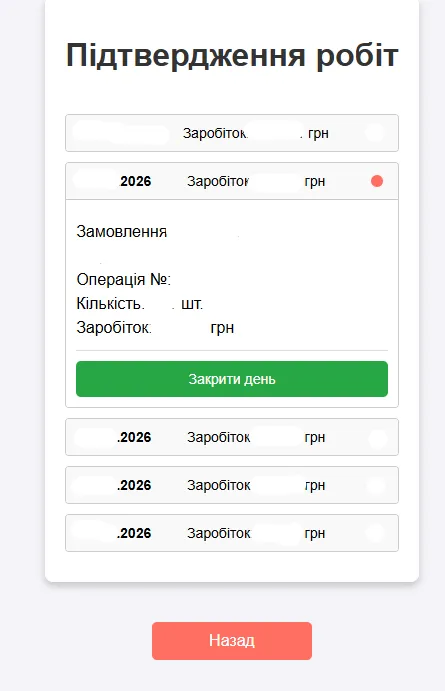
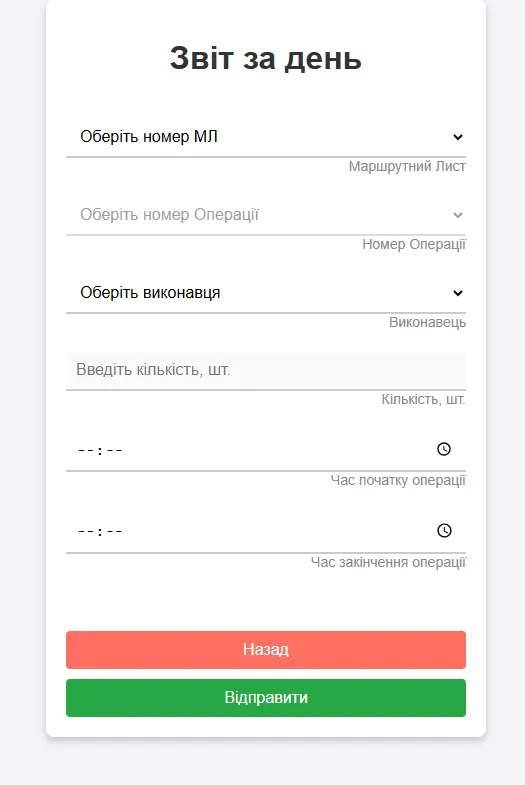
- Scenario 1 (Planned): The foreman distributes the operational plan for the shift in advance. The seamstress receives the generated task. At the end of the shift, the foreman only registers actual completion. If the quota is not met, the time or quantity figures are adjusted.
- Scenario 2 (Actual): Data is entered as bundles are ready. The seamstress completes the operation, brings the finished work to the foreman, the foreman checks quality, and immediately logs the fact into the system.
Set of recorded parameters:
Regardless of the chosen scenario, a single minimum set of data is entered into the database:
- Order number
- Technological operation number (from the tech card)
- Executor's name (seamstress)
- Actual quantity of handed-over items
- Start and end time of work on the bundle
Speed and Quality Control:
Data entry is based on selectable lists (dropdown menus, scanning) without manual typing. On average, a foreman spends 2–3 hours per shift working with the system. Data entry itself takes no more than 20% of the time, while the remaining 80% is invested in what the foreman is truly needed for on the floor—quality control of seams and assembly.
2. Database for AI Load Distribution
Regularly recording operation execution times is not just collecting statistics for payroll. By accumulating this data, the system forms a digital performance profile for each employee (who zips fastest, who is perfect at binding, who has the lowest defect rate).
This statistic creates the foundation for an AI-based automatic work distribution module:
- The algorithm calculates the optimal flow load and distributes operations among seamstresses based on their real speed and qualifications.
- The foreman shifts from being a "task distributor" to an expert controller who smooths out deviations and approves the plan proposed by the system.
3. Payroll Calculation and Seamstress Portal
The garment industry uses two main wage systems: piece-rate (output) and time-based (fixed rate).
Important system rule: Completed operations are recorded for all employees without exception. Even if a seamstress works on a fixed rate, the chronometry and volume of completed positions are necessarily recorded in the database—this is essential for calculating the real product cost and monitoring flow performance.
Payroll Calculation Functionality:
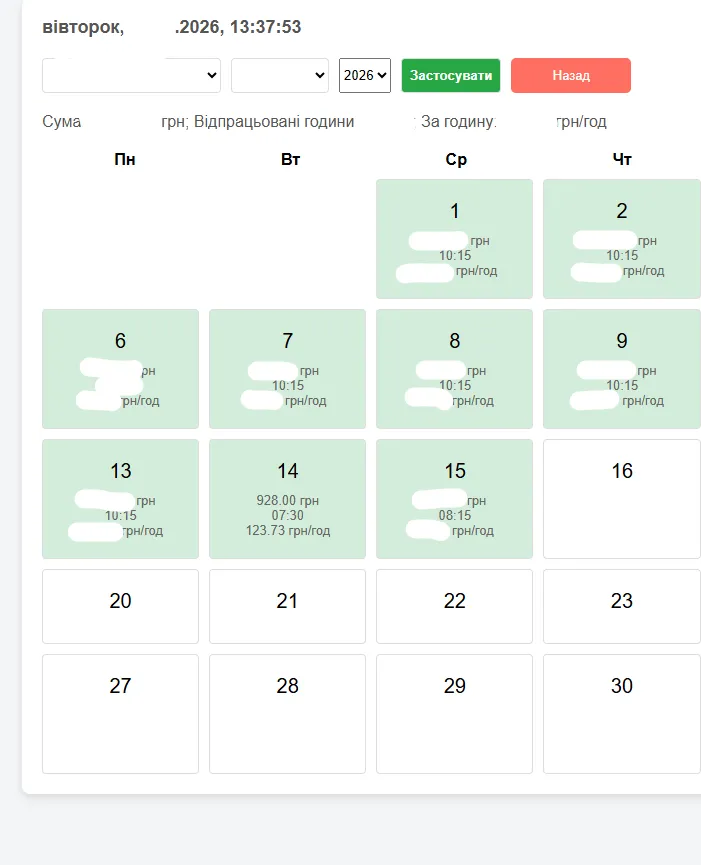
- Transparency for the seamstress (Personal Portal): A seamstress can view the breakdown of her earnings in her interface at any time: completed operations, applied rates, order numbers, and the total amount for the shift or month. This completely eliminates questions, disputes, and mistrust during payroll processing.
- Reporting for Management and Accounting: The system automatically generates summary output sheets for any period (day, week, month). The accountant doesn't need to manually collect and double-check dockets—the final payroll figures are generated in one click.
Section 6. Analytics, Reporting, and the "Mechanic" Module (IoT Equipment Monitoring)
1. "Analytics and Reporting" Module (Ready for Operation)
The analytics section is fully functional. Every garment production manager has their own set of KPIs, so the system does not impose rigid frameworks. Since the database records every digital footprint (from the incoming roll measurement in the cutting room to the second a bundle is scanned by a seamstress), the analytics dashboard adapts to the specific factory's tasks.
The basic package of ready reports includes:
- Seamstress output and performance: Individual productivity, percentage of time norm fulfillment, efficiency dynamics by shifts and operations.
- Financial economy of the order: Comparison of planned and actual costs (consumption of main raw materials, hardware, inter-pattern waste, actual payroll).
- Flow load and balancing: Real-time monitoring of bottlenecks on technological lines.
- Custom Report Builder: Exporting and visualizing any combinations of saved primary data upon management request.
2. "Mechanic" Module (Status: R&D, active development and testing)
⚠️ Please note: The "Mechanic" module and telemetry equipment belong to the category of complex engineering software solutions. This section is currently in active development and closed pilot testing (R&D). The module will not be available to end-users until it has undergone a 100% testing cycle and proven flawless stability.
The module is designed to shift equipment maintenance from a reactive mode ("machine broke — seamstress waits for mechanic") to a strict schedule and predictive repair.
A. Scheduled Maintenance (PM) by Operating Hours
Maintenance is tied not to calendar dates, but to the actual operating hours of the equipment:
- Automatic notifications: The mechanic receives a task (via email or interface) exactly when the maintenance deadline is reached.
- Comprehensive checklist: The request immediately specifies the ID and exact location of the machine, brand and volume of oil to replace, required filters/consumables, and the necessary toolset. The mechanic approaches the machine fully prepared.
B. Dispatching Emergency Requests and AI Breakdown Triage
When a malfunction occurs, the operator or foreman creates an electronic request via a terminal or smartphone.
- Mandatory detailing: The system requires a detailed description of the breakdown symptoms (nature of stitch failure, extraneous noises, incorrect behavior of nodes).
- AI Diagnostics: The request is automatically forwarded to a neural network loaded with technical guides and service manuals for specific machine models.
- Mechanic prompt: The AI analyzes symptoms, forms a preliminary diagnosis, indicates the most likely faulty nodes, and generates a list of parts and tools to take along. This eliminates pointless walking by the mechanic across the workshop for a missing wrench.
C. Telemetric IoT Add-on (Hardware R&D)
To transition to preventive (predictive) maintenance, a universal hardware module is being developed that connects to sewing machines of any type and year of manufacture.
- Parameter collection: Real-time sensors record working cycles, total operating hours, vibration levels, and the temperature regime of the motor and mechanical assemblies.
- Early wear detection: Algorithms detect anomalous micro-vibrations and heating (signs of bearing wear, shuttle hook issues, or lubrication deficit) hours or days before a critical emergency failure.
- Preventing downtime: The mechanic receives a signal and fixes the defect during a scheduled break or between shifts without stopping the sewing line (global studies show a predictive approach reduces unplanned equipment downtime by 30–50%).
Section 7. "Accounting and Finance" Module
«Revenue is vanity, profit is sanity, but cash is king.»
— Alan Miltz
The financial module ensures that goods flows perfectly match cash movements. Every production operation—from purchasing raw materials to paying piece-rate wages to seamstresses—must have strict financial confirmation.
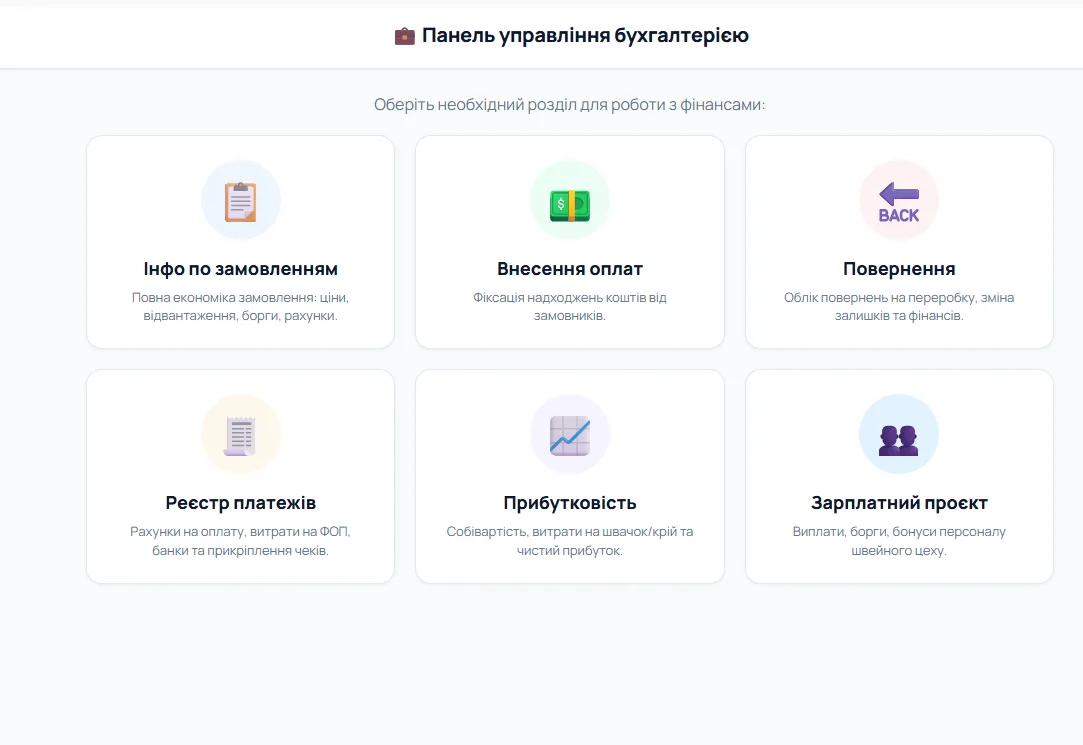
The accounting module was designed knowing that different sewing factories organize financial accounting differently.
1. Two Operation Models for the Module
Option A: Synchronization with External Accounting System (Mirroring)
Replaces duplication if the factory handles tax and strict accounting in third-party software (1C / BAS, QuickBooks, etc.). An accountant or finance manager enters key actual transactions (customer payments, supplier payouts) into our system. This ensures that production modules (cutting, warehouse, sewing line launch) see the financial status of the order and do not block operational work.
Option B: Automatic End-to-End Billing ("Free Flight")
The system takes over the routine of issuing documents and tracking payments without an accountant's involvement at basic stages:
- Advance Invoice: Instantly generated and emailed to the customer or sent to their portal right after they confirm the order composition and approve raw material inspection.
- Final Invoice: Automatically generated and billed to the client the moment the warehouse registers 100% readiness and batch kitting before shipment.
- Shipment Blocking: If an order has outstanding receivables, the system blocks the generation of shipping manifests for the storekeeper.
2. Expense Management and Payment Request Module
Cost accounting is built on a single-window principle. Any department (cutting room, sewing line, warehouse, mechanics) creates an Expense Request in the system:
- Purchasing threads or hardware for shortages;
- Buying spare parts and oil for equipment repair;
- Paying regular utilities, rent, or logistics.
Request Routing: Department head creates a request → Accountant sees it in the payment queue → After payment, the accountant marks it in the system and attaches the receipt. This allows for payment calendar planning and avoiding cash gaps.
3. Bank Integrations and Payment Allocation
Automating incoming money tracking depends on the factory's banking infrastructure:
- Direct API Integration (e.g., Monobank and similar): The system automatically pulls bank statements in real-time. Upon receiving a payment, the algorithm recognizes the purpose or order ID and automatically changes the order status to "Paid," lifting financial blocks from production.
- Manual Entry and Statement Import: If the factory uses banks without an open API or works with multiple accounts across different institutions, the accountant allocates payments manually via a standard web form or statement file import (CSV/XLS).
4. Connection to the Analytics Module
- The accounting section itself focuses on operational money movement (invoices, acts, payment orders, requests).
- All primary income and expense data are broadcast to Section 6 ("Analytics and Reporting"). This is where the final financial reports are formed:
- P&L (Profit & Loss Statement) per order;
- Model margin analysis;
- Cash Flow statement.
The format and composition of these reports are customized to the factory management's requirements.
Section 8. "Swift CRM" Module: Client Management and B2B Sales
«Acquiring customers is hard. Keeping them is harder. Growing them is where the real value lies.»
— Marc Benioff
Sales management in garment manufacturing is fundamentally different from classic retail or IT services. There are no thousands of tiny retail receipts a day here—the factory operates in the B2B segment, where losing one key brand or client means slashing factory utilization by 15–30%.
To solve this, Swift CRM was created—a specialized CRM system developed by SiWItPro. It can work as a standalone product for the sales department or seamlessly integrate into the garment manufacturing management ecosystem.
1. Why Does a Sewing Factory Need a CRM? (Specifics of B2B Communication)
Sewing production managers often handle clients via messengers, personal email, and paper notebooks. When a factory has 10–20 active clients, it feels like "everything is under control."
However, critical details are inevitably lost in messengers: adjusted fabric colors, packaging nuances, volume discount agreements, or pattern files. If a manager gets sick or quits, the entire history of working with a brand leaves with them.
Swift CRM brings order to communication:
- All chats, emails, calls, and files are gathered into a single digital client profile.
- Any factory employee can restore the entire 3-year history with a brand in 10 seconds.
- A strict protocol eliminates situations where an incoming sewing request is simply "forgotten."
2. The Principle of Engineering Minimalism and Quick Start
Most popular CRM systems (Salesforce, HubSpot, Zoho) suffer from overloaded interfaces, invented jargon, and complex setup requiring a dedicated integrator.
Swift CRM is designed on the "Zero Friction" principle:
- Intuitive Interface: The system has no superfluous buttons, marketing "noise," or clunky settings.
- Low Entry Barrier: A new sales manager or factory admin masters the system in 2 days without taking lengthy courses.
- Operational Speed: Any action (adding a contact, changing order status, creating a task) takes 1 to 3 clicks.
3. Functional Arsenal of Swift CRM
The system contains a full set of tools tailored to the sales cycle in light industry:
- End-to-End B2B Sales Funnel: Guiding the client through all stages—from the first contact (cold lead) to feasibility calculation, sewing a golden sample, making a prepayment, and launching the main batch.
- Client Card and Model Registry: Storing a personal pattern database (PLT/DXF), specific QC requirements, and historical data on all produced models and volumes.
- Built-In Task Scheduler: Reminders for follow-ups, sending samples via courier services, approving specifications, and invoicing.
- IP Telephony Integration: Recording all phone conversations linked to the client card. An incoming call instantly pops up the client's card showing their current orders and balance.
- Internal Comment Feed: Instantly tag a technologist, cutting room manager, or accountant right in the order card to quickly agree on terms.
4. Seamless "Sales → Production" Link
The true power of Swift CRM is revealed when it operates in a unified loop with factory management modules:
- Automatic Process Triggering: As soon as the manager moves a deal to the "Prepayment Received" status, the system automatically initiates an order for raw material inspection in Section 3 (Cutting) and hardware reservation in Section 4 (Warehouse).
- Transparency for the Client: The manager doesn't run to the workshop to find out "what's up with batch #104." They see the real-time execution status right in the CRM.
- Data Security: The system flexibly segregates access rights—a sales manager only sees their financial metrics and clients, while management gets full analytics across the entire department.
Section 9. "HR Department and Personnel Management" Module
«Clients do not come first. Employees come first. If you take care of your employees, they will take care of the clients.»
— Richard Branson
In the garment industry, the human factor is paramount. Even the most modern automated equipment (cutting complexes, automatic pocket setters) is powerless without qualified seamstresses, technologists, and foremen. Meanwhile, the sewing sector historically faces high staff turnover, specific piece-rate pay, and the need for strict compliance with labor laws.
The "HR and Personnel Management" module covers everything from hiring and digital HR records to vacation planning and skill management.
1. Electronic Employee Cards and Documents
A unified database for the entire staff (seamstresses, cutters, mechanics, managers):
- Employee Data: Date of hire, position, personal contacts, bank details.
- Document Storage: Employment contracts, orders (hiring, transfer, dismissal), passports, tax IDs.
- Specific Documents: Monitoring expiration dates of medical books and safety briefings.
2. Vacation Schedule and Absence Tracking
A simple tool for controlling staff presence at workstations:
- Vacation Planning: A visual vacation calendar by brigades and departments to prevent line downtime due to key employees leaving simultaneously.
- Recording Absences: Quick entry of sick leave, time off, and unpaid leave.
3. Time Tracking and Shift Schedules
- Work Schedules: Setting up shift schedules (5/2, 2/2, rotational).
- Timesheet: The ability to see how much a seamstress actually worked versus just being on the premises.
Section 10. "Client Portal" Module
«Transparency builds trust, and trust drives long-term partnerships.»
The main idea of the Client Portal is to bring the customer as close as possible to the factory's production processes. Instead of endless calls and messenger chats asking "When will it ship?", the client gets 24/7 access to a unified control panel.

1. Model Catalog and Digital Passports
All of the customer's history and product specifications are stored in one place:
- Product Base: Access to all developed and previously sewn brand models.
- Technical Documentation: View specifications, tech sequences, and current pattern sets (PLT/DXF).
2. Real-Time Order Tracking
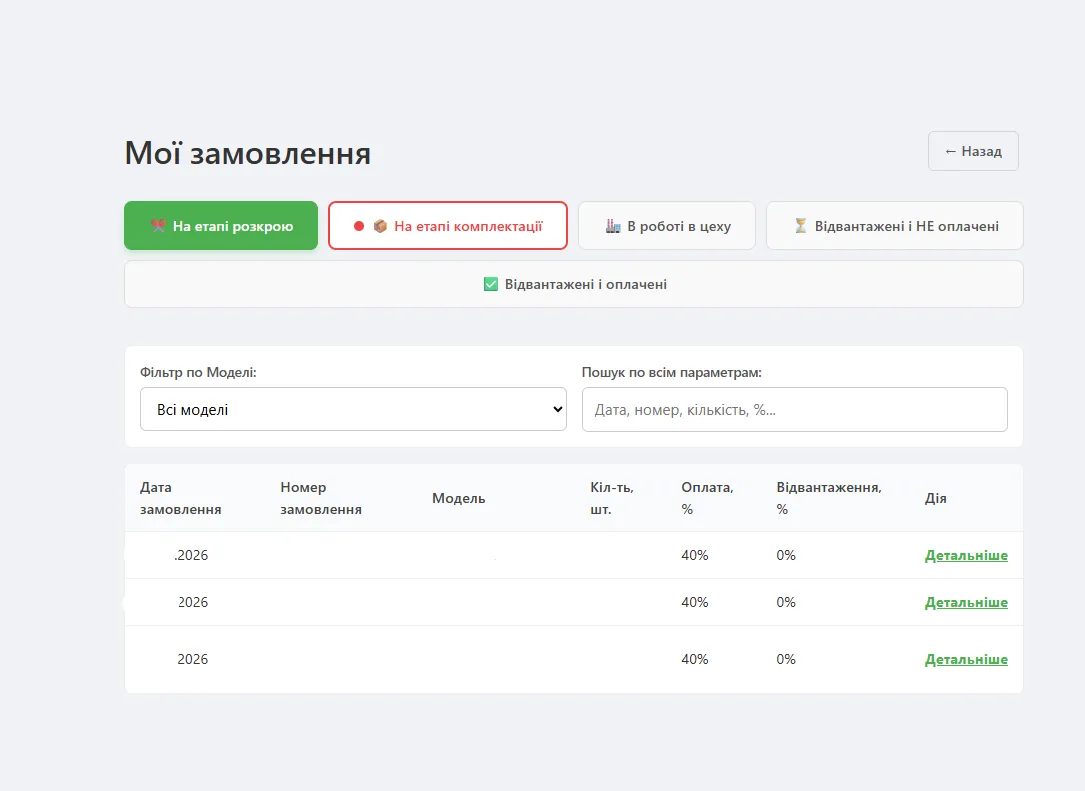
The client sees the movement of each batch through the production chain online:
- Production Stages: Transparent order status: Raw Material Receipt → Cutting → Kitting → Sewing Room → Ready for Shipment.
- Deadline Forecasting: Assessing batch readiness without manager involvement.
3. Quick Launch of New Orders and Samples
Self-generating requests directly into the factory system:
- New Production Order: Submitting a volume request for a previously approved model in a few clicks.
- Sample Sewing Order: Filling out a convenient form to pass a new model to the experimental workshop (sewing a golden sample).
4. Financial Accounting and Mutual Settlements
The client always sees their financial standing with the factory:
- Invoices and Payments: Viewing issued invoices (prepayment/surcharge) and their payment status.
- Settlement Balance: Detailed payment history and current balance for each order.
5. 24/7 Online Toll Material and Hardware Tracking
Controlling own materials stored at the factory warehouse:
- Current Balances: Viewing balances of fabrics, threads, buttons, zippers, tags, and other hardware physically at the factory.
- Material Movement: Visibility into how much material was written off for a specific batch and how much remains in reserve.
Main Result of the Module: The customer sees everything happening with their materials and orders at the factory at any convenient moment. This saves dozens of hours for managers and boosts client loyalty.
Conclusion. The New Standard for Ukraine's Light Industry
The Ukrainian garment sector is currently undergoing a colossal transformation. Amid fierce competition, high raw material costs, and a shortage of personnel, only those enterprises that prioritize absolute digital precision will survive and dominate. Running a factory "the old way"—in spreadsheets, notebooks, and endless chats—is not just an outdated approach. It is a daily hidden leak of your profit.
The system described is not just a tool or "another accounting program." It is the fundamental axis around which a modern, strong, and highly profitable garment production is built.
Why This is the Only Solution Your Enterprise Truly Needs
- You take back permanent control over money and fabrics.
No more mysterious shortages, write-offs "into thin air," lost hardware, or shade mismatch on cuts. Every gram, meter, and spool is accounted for, locked against theft, and tied to a specific order. - You free your business from the human factor.
"Hard quality gates" across all 10 stages operate with pharmaceutical precision. The system physically won't allow a defect into the workshop, won't allow shipping an unpaid order, and calculates a fair piece-rate salary for every seamstress without foremen doing late-night math. - You provide your clients with world-class service.
24/7 portals and transparent order tracking turn your B2B clients into fans of your brand. You no longer waste hours on calls and excuses—you give them total transparency, for which they are willing to pay more and return again. - You gain absolute freedom and peace of mind.
The entire factory—from warehouse and cutting to analytics, CRM, and finance—is in the palm of your hand. You see the real margin of every seam and every order online from anywhere in the world.
This is Not Just a Choice. It is the Biggest Step in Your Factory's History
You can continue fighting daily "fires," losing margin on mis-sorting, arguing over salaries, and listening to client complaints. Or you can take one step that will once and for all divide your business history into "before" and "after."
This system is the missing link that will turn a complex, nerve-wracking sewing process into a fine-tuned, transparent, and highly profitable machine. After trying it for just one week, you'll ask yourself only one question:
«God, how did we ever live and work without this all these years?»
This is not just automation. This is the new standard of light industry in Ukraine.